

 See My Latest Article on HelloNation
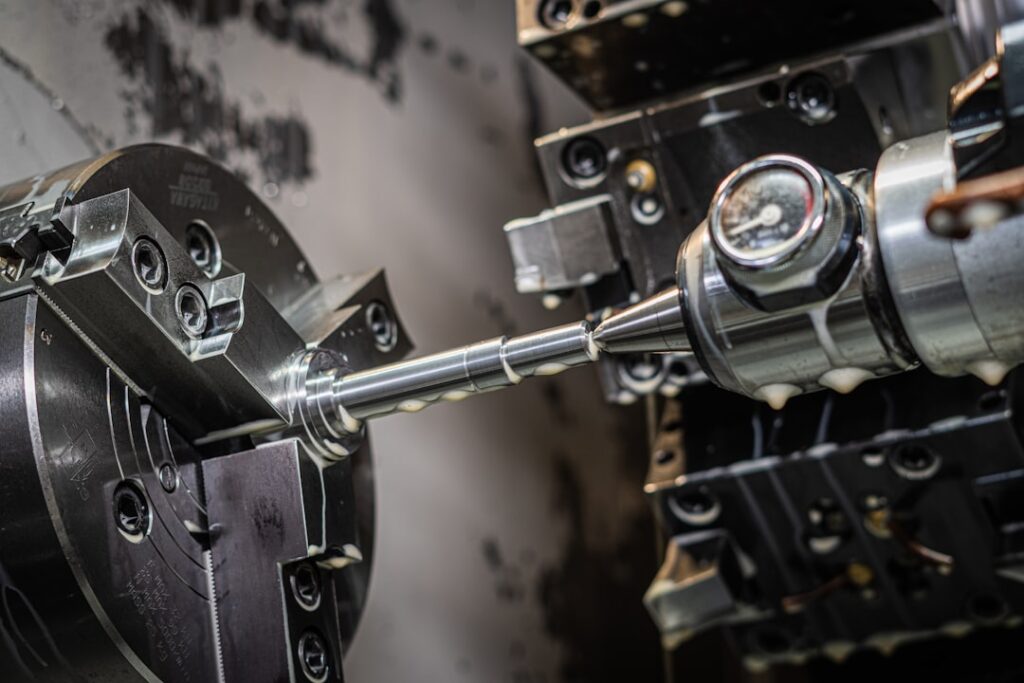
What Is a 5-Axis CNC Machine?
A 5-axis CNC machine is a type of computer-controlled equipment that can move a workpiece or tool along five different axes at the same time. This allows for very complex shapes and contours to be created in a single setup, which isn’t possible with basic CNC machines that only move in three axes (X, Y, and Z).
Rather than just moving left-right, front-back, and up-down, 5-axis machines add two additional rotational movements. These extra movements make it possible to access nearly every surface of a part, making them especially useful for producing intricate components with high accuracy.
How Does a 5-Axis CNC Machine Work?
A 5-axis CNC machine operates by using advanced software to control multiple servo motors. The five axes typically include three linear (X, Y, Z) and two rotational movements, often called A-axis (rotation around X) and B- or C-axis (rotation around Y or Z).
- The tool or the part itself can rotate and tilt, letting complex angles and curved surfaces be cut without repositioning the material.
- The CNC (computer numerical control) interprets computer-generated models, converting them into movements for the machine to follow.
This technology allows for the creation of parts that would otherwise require several separate operations and setups.
Why Are 5-Axis Machines Useful for Grand Rapids Residents?
Residents and manufacturers in Grand Rapids may encounter 5-axis machines in industries such as automotive parts, furniture hardware, or prototype creation for local innovation. This advanced machinery can handle projects that require:
- High precision for detailed projects
- Reduced set-up time (more efficient production)
- The ability to produce complicated shapes like turbine blades, custom molds, or orthopedic devices
Local students, hobbyists, and small-scale inventors who are learning about manufacturing might encounter these machines through educational programs or maker spaces, where their versatility opens up new design possibilities not possible with simpler equipment.
What’s the Difference Between 3-Axis and 5-Axis CNC Machines?
The primary difference is in movement capability and part accessibility. A 3-axis machine can cut in just three straight lines (left-right, forward-back, up-down). Every time a new surface is needed, the piece usually has to be removed and re-fixtured, which can lead to minor errors or mismatches.
A 5-axis machine can continuously cut surfaces in multiple directions without stopping or moving the part, leading to:
- More accurate and complex parts
- Fewer manual interventions
- Faster turnaround on challenging projects
This is particularly helpful for jobs where accuracy is critical or where the design calls for undercuts, holes at odd angles, or organic shapes.
Are There Common Misconceptions About 5-Axis CNC Machines?
Several common misunderstandings exist about these machines:
- They are only for large-scale factories: In reality, smaller 5-axis units exist for prototype shops and educational labs, which sometimes serve the local community.
- They replace skilled machinists: While highly automated, these machines still require trained operators for setup, programming, and monitoring.
- All projects need 5-axis: Many parts can still be efficiently made on 3-axis machines; not every task requires five axes, especially for simpler parts.
What Should Local Residents Know About Operating or Accessing 5-Axis CNC Technology?

Learning to use a 5-axis CNC machine requires special training. Local residents participating in technical education programs or hobbyist groups may find hands-on opportunities to practice:
- Understanding CAD (computer-aided design) and CAM (computer-aided manufacturing) software
- Learning the basics of machine setup and safety
- Gaining experience with more advanced controls and maintenance
Grand Rapids experiences both large-scale manufacturing and grassroots innovation. Community members may see these machines in industrial tech centers, collaborative workspaces, or higher education settings, especially in regions focused on innovative product design.
In What Situations Is a 5-Axis Machine Most Beneficial?
The benefits are most obvious when:
- The design requires multiple angles to be machined in a single setup
- The finished piece needs to have tight tolerances on many surfaces
- Repetitive repositioning would introduce errors or take excessive time
Examples include advanced automotive parts, specialized surgical components, aerospace fixtures, or complex wood and metal art installations.
What Are the Limitations or Challenges with 5-Axis CNC Machines?
While flexible and powerful, these systems do present some challenges:
- The machines are more expensive and complex than 3-axis versions, both to buy and to maintain
- Training takes more time, as the controls and software are more advanced
- Mistakes in the programming phase can have larger impacts, as cutting heads may move in unexpected directions if not carefully managed
For most home workshops or light fabrication needs, other equipment may be a more practical starting point. However, for anyone interested in learning about the possibilities of modern machining or considering a career in local precision manufacturing, understanding what 5-axis machines can do is a valuable skill.