
 See My Latest Article on HelloNation
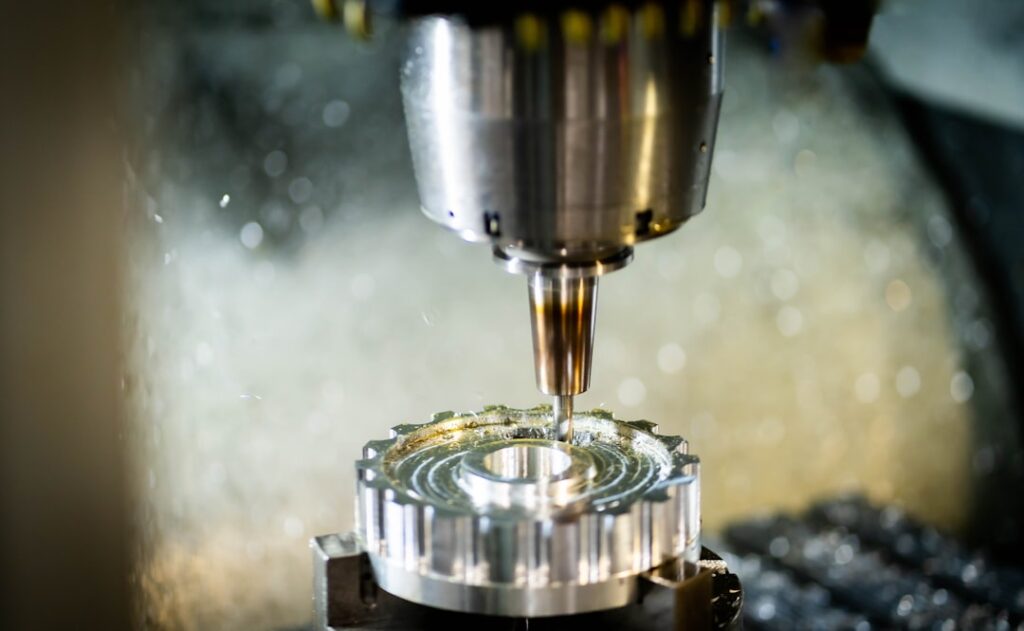
Understanding CNC machine tolerances is crucial for anyone involved in manufacturing, engineering, or quality assurance—especially in a city like Grand Rapids, MI, where a legacy of craftsmanship and innovation runs deep. As the Furniture City diversifies into the modern era with advanced manufacturing, the need to grasp the nuances of tolerances in CNC machining becomes ever more important. In this article, we’ll explore what CNC machine tolerances mean, why they matter, and how they relate to the lifestyle and industries in Grand Rapids.
What are CNC Machine Tolerances?
Tolerances in CNC machining refer to the permissible limit or limits of variation in a physical dimension. In simpler terms, it's the degree to which a machined part may deviate from its exact intended dimension without impacting its function. These tolerances are specified during the design phase and communicated via engineering drawings.
- Tighter tolerances: Means less deviation is allowed. Typically measured in thousandths of an inch (0.001") or even micrometers (μm).
- Looser tolerances: Allow for greater variation. Used when precision isn’t critical.
Why are Tolerances Important in CNC Machining?
Tolerances directly impact the performance, safety, and interchangeability of machined components. In industries prevalent in West Michigan—like automotive, aerospace, and medical device manufacturing—precision can be the difference between a product that works flawlessly and one that fails.
- Interchangeability – Parts built to tight tolerances can be swapped out with confidence, minimizing downtime. This is especially important in Grand Rapids' robust manufacturing sector, where efficiency is often key to competitiveness.
- Safety and Reliability – Components in critical applications, like hospital equipment made locally, rely on consistent quality.
- Cost Efficiency – Overly tight tolerances can lead to waste and higher production costs. Striking the right balance is part of what makes for standout manufacturing in Grand Rapids.
Types of Tolerances in CNC Machining
When residents think about the craft that built Grand Rapids’ reputation—from finely constructed furniture to advanced machine tools—attention to tolerances is a common thread. There are several types of tolerances machinists and engineers consider:
- Dimensional Tolerance – Controls the general dimensions such as length, width, and height.
- Geometric Tolerance – Specifies allowable variations in shape (flatness, roundness, etc.).
- Surface Finish Tolerance – Addresses the smoothness or texture of the part’s surface.
How Are Tolerances Specified?
Designers use engineering drawings to document both the nominal dimensions and the allowable tolerances. These may be presented as:
- Plus/Minus (+/-) – The most common, as in 1.000" ± 0.005".
- Limit Dimensions – Indicating upper and lower bounds, e.g., 0.995"/1.005".
- Geometric Dimensioning & Tolerancing (GD&T) – A more advanced way allowing for more precise control of complex shapes and relationships.
What Influences Tolerance Choices?
Choosing the correct tolerance for a CNC machined part involves several factors:
- Function of the Part – Will it move, hold something together, or fit into another part?
- Material Properties – Some materials are easier to machine to tight tolerances than others.
- Manufacturing Capabilities – Not all machines or shops can achieve the same tolerances.
- Cost vs. Benefit – As tolerances tighten, costs rise. Knowing when “good enough” really is good enough is part of the expertise developed by Grand Rapids professionals.
Tolerances and Local Industry in Grand Rapids, MI

Grand Rapids is home to manufacturers serving the automotive, medical, furniture, and aerospace sectors. Each industry has unique requirements for part tolerances:
- Automotive and Aerospace – These often require high-precision CNC parts, with tolerances as tight as ±0.0005".
- Furniture Manufacturing – Here, tolerances matter for fit and finish, but are typically less stringent than aerospace.
- Medical Devices – Given the critical nature of the end products, tolerances are strictly controlled, and documentation is rigorously maintained.
This diversity of industry means local CNC shops must be versatile and knowledgeable about a wide range of tolerance standards. Grand Rapids’ workforce is known for its precision and adaptability—qualities that are cultivated in trade schools, tech centers, and on the factory floor.
Life in Grand Rapids: Precision Beyond the Factory
Attention to detail is woven into Grand Rapids’ culture. The same discipline required to maintain CNC tolerances echoes through local life:
- Home DIY projects benefit from tools and materials that fit properly—no more wrestling with ill-fitting parts from the hardware store.
- Artisans and makers in the city’s thriving creative community depend on reliable components for everything from custom bikes to innovative furniture.
- Local landmarks—from the sleek lines of Calder Plaza’s sculpture to the historic details of Heritage Hill architecture—remind us that precision and craftsmanship have always been core to the Grand Rapids identity.
How to Ensure Accurate Tolerances in CNC Machining
If you work with CNC machining—whether as a designer, operator, or purchaser—consider these tips to get the best results:
- Communicate Clearly – Ensure engineering drawings are unambiguous and that tolerances are well-justified.
- Work with Experienced Local Shops – Established Grand Rapids CNC shops have the skill and technology to deliver precise results.
- Invest in Quality Control – Use inspection tools like calipers, micrometers, and coordinate measuring machines (CMMs) to verify parts.
- Understand Materials and Processes – Collaborate with machinists to choose the right materials and techniques for your project.
Conclusion
Understanding CNC machine tolerances unlocks the full potential of advanced manufacturing—right here in Grand Rapids. Whether you’re producing high-precision automotive parts, medical instruments, or the next handcrafted local masterpiece, mastering tolerances means your vision becomes reality with reliability and pride.
For the people and businesses of Grand Rapids, this commitment to precision continues to drive our reputation as leaders in quality and innovation. Next time you use something built locally, remember: behind that seamless fit and flawless function lies the quiet expertise of those who truly understand CNC machine tolerances.